
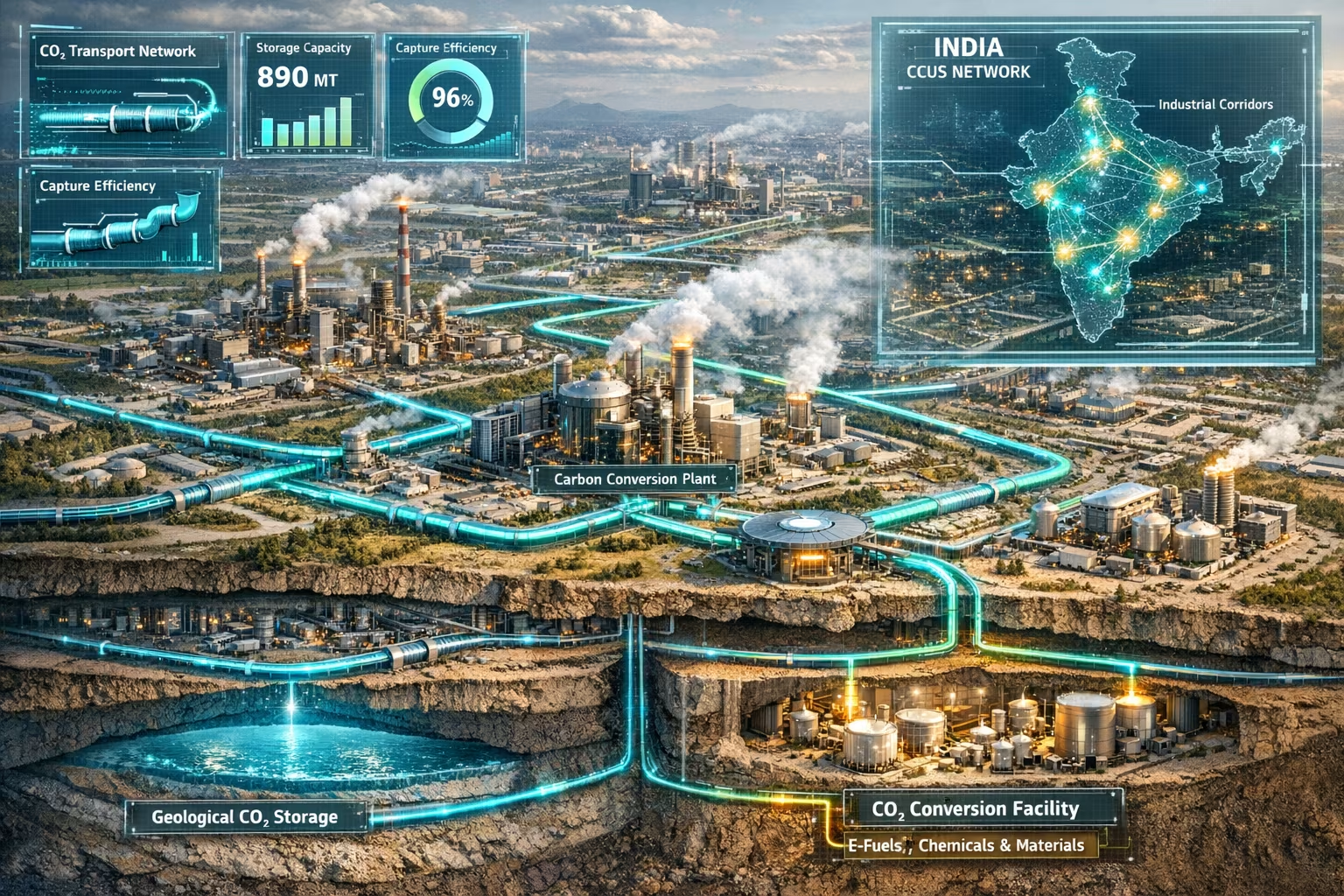
Carbon Capture Infrastructure: Planning Your Industrial Deployment
Infrastructure planning is where carbon capture projects succeed or fail. Technical decisions made during project design determine operational performance and carbon credit generation capacity for the system's entire operating life.
For strategic context, see our comprehensive Carbon Capture Technology Guide.
Site Assessment and Emission Source Mapping
The first step in any carbon capture infrastructure project is a comprehensive site assessment. This maps every significant emission source:
- Stack and vent emission measurement - volumes and concentrations
- Physical constraints on equipment installation
- Ranking of sources by capture potential and commercial return
- Utility availability assessment - steam, cooling water, electrical power
A rigorous site assessment is the foundation of an accurate cost estimate and a realistic project plan. It replaces assumptions with facility-specific data.
System Layout and Integration Planning
Carbon capture system layout must integrate with existing plant infrastructure without disrupting production operations. Key considerations include:
Physical Constraints
- Available footprint for absorber columns and regeneration units
- Proximity to target emission sources - minimising ducting length and pressure drop
- Structural loading capacity for equipment on existing structures
Process Integration
- Steam extraction points for regeneration heat input
- Cooling water availability and temperature requirements
- Electrical supply capacity for compression and control systems
CEMS Integration and Data Architecture
The continuous emission monitoring system is the commercial infrastructure of the entire project - the equipment that generates the verified reduction data that underpins carbon credit issuance. Underinvestment in CEMS infrastructure is the most common reason carbon credit verification fails.
CEMS must be:
- Installed in compliance with the requirements of your target verification protocol
- Regularly calibrated and maintained to maintain certification status
- Integrated with a data management system that produces audit-ready records
- Configured to generate the specific data formats required by your chosen carbon registry
Phased Deployment Planning
For facilities deploying modular systems or addressing multiple emission sources, phased deployment planning defines:
- Which source is addressed first - typically highest concentration, most accessible stream
- What the Phase 1 system design includes and what infrastructure is pre-staged for Phase 2
- How Phase 1 carbon credit revenue contributes to Phase 2 financing
- Timeline for each phase and interim commercial milestones
Maintenance and Operational Infrastructure
Planning for operational infrastructure from the outset reduces operating cost and downtime burden over the system's life:
- Dedicated maintenance access routes to key equipment
- Chemical storage for solvents and consumables
- Spare parts inventory for critical components
- Training protocols for operations and maintenance staff
For equipment specifications, see the carbon capture equipment guide. System type options are in types of carbon capture systems. Cost planning context is in our carbon capture cost analysis. For the broader manufacturing infrastructure context, see our guide on Green Manufacturing Infrastructure.
Conclusion
Infrastructure planning quality determines system performance over a 15-20 year operational life. The full technology context is in our Carbon Capture Technology Guide. Equipment specifications are covered in the carbon capture equipment guide. System type options are in types of carbon capture systems. For the broader manufacturing infrastructure perspective, see our guide on Green Manufacturing Infrastructure.
Carbon.ind.in provides full infrastructure planning services as part of every project development engagement. Book a site survey to start.