
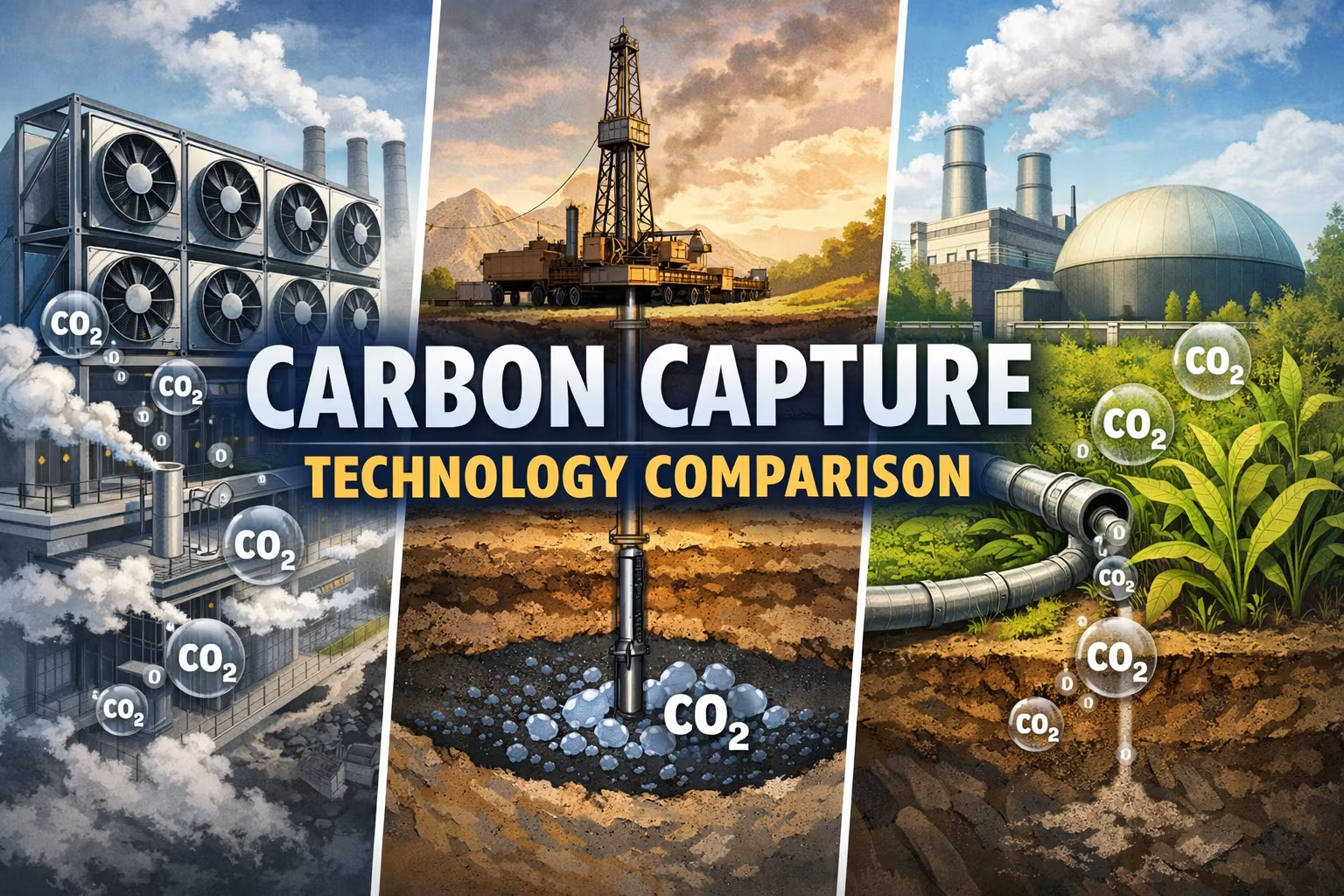
Carbon Capture Technology Comparison: Choosing the Right System for Your Facility
Choosing between carbon capture technologies is one of the most consequential decisions in an industrial decarbonisation project. The right choice depends on your facility's specific emission profile, process chemistry, available footprint, and commercial objectives.
For strategic context, see our comprehensive Carbon Capture Technology Guide.
Post-Combustion vs Pre-Combustion: The Retrofit vs Greenfield Decision
The most fundamental technology comparison for Indian industrial facilities is between post-combustion and pre-combustion capture.
Post-Combustion Capture
- Applicable to existing infrastructure without upstream process changes
- Commercially proven at scale across cement, steel, and power sectors
- Most applicable technology for Indian industrial retrofit situations
- Higher operating cost due to regeneration energy requirement
Pre-Combustion Capture
- Most relevant for greenfield projects and facilities with specific hydrogen production objectives
- Lower downstream separation costs but higher upstream process modification cost
- Best suited to refineries and integrated chemical plants
Amine Scrubbing vs Solid Sorbents
Within post-combustion capture, the primary technology comparison is between conventional liquid amine scrubbing systems and emerging solid sorbent technologies.
Amine Systems
- Commercially proven and well-understood
- Established supply chain in India
- Higher regeneration energy requirement
- Lower deployment risk for first-time installations
Solid Sorbent Systems
- Lower regeneration energy requirements - 30-50% reduction potential vs first-generation amines
- Simpler handling and no liquid management requirements
- Earlier commercial maturity stage - higher deployment risk
- Improving economics as technology scales
For Indian industrial deployments today, amine systems offer lower risk and better-established economics. Solid sorbent systems will become increasingly competitive as their commercial track record develops over the next 3-5 years.
Modular vs Bespoke System Design
Modular
- Faster deployment and lower installation risk
- Incremental capital commitment aligned to commercial returns
- Best for first-time deployments and facilities below 200,000 tonnes annually
Bespoke
- Higher capture efficiency at large scale
- Lower operating cost per tonne over system lifetime
- Better integration with complex process environments
- Best for large-scale deployments where marginal efficiency improvements create significant cost differences
Multi-Pollutant vs Single-Pollutant Systems
Many Indian industrial facilities face compliance obligations across multiple emission categories simultaneously. Multi-pollutant systems that address CO2, SOx, NOx, and particulates in an integrated installation can offer total cost savings compared to separate systems for each pollutant.
Vendor Comparison Criteria
When comparing vendors and technology providers, evaluate:
- Demonstrated capture efficiency at your specific emission concentration
- Solvent or sorbent degradation rate and makeup cost
- Regeneration energy consumption per tonne of CO2 captured
- CEMS specification and compatibility with your target verification protocols
- After-sales maintenance support capability in India
- References from comparable industrial deployments
For detailed system categories, see types of carbon capture systems. Equipment specification criteria are in the carbon capture equipment guide. Cost comparison framework is in our carbon capture cost analysis. For the broader industrial scrubbing technology landscape, see Industrial Scrubbing Systems.
Conclusion
Technology selection is the most consequential decision in a carbon capture project. Get it right and you have a 15-year asset generating returns. The full strategic context is in our Carbon Capture Technology Guide. System categories are detailed in types of carbon capture systems. Equipment specifications are in the carbon capture equipment guide. And the multi-pollutant technology landscape is covered in our guide on Industrial Scrubbing Systems.
Carbon.ind.in provides independent technology selection guidance as part of every project assessment. Book a site survey today.