
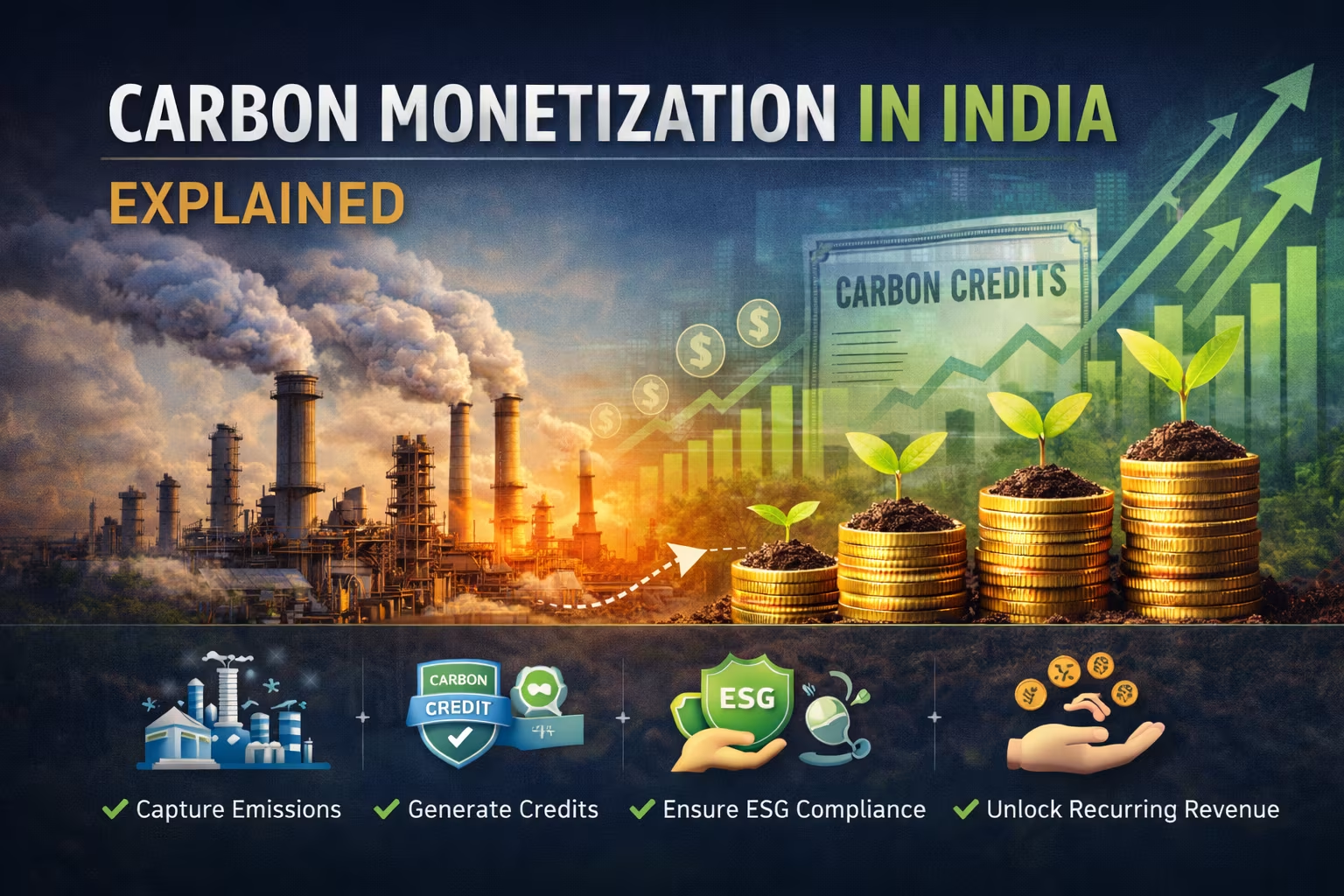
Carbon Monetization in India: Turning Industrial Emissions into Revenue
For years, industrial emissions were treated as unavoidable side effects of growth — something to manage, control, and pay penalties for.
But India’s evolving carbon ecosystem is changing that equation.
Today, Carbon Monetization in India is emerging as a powerful financial strategy — allowing industries to convert compliance into recurring revenue.
If your plant emits carbon, the real question is no longer “How do we reduce penalties?”
It’s “How do we earn from this?”
Why Carbon Monetization Matters Now in India
India is moving aggressively toward:
- Net-zero commitments
- Structured carbon trading frameworks
- ESG-driven investment models
- Sustainability-linked industrial policies
This shift creates a historic opportunity.
Industries that adopt a structured Carbon Credit Revenue Model early can:
- ✔ Generate tradable carbon credits
- ✔ Improve ESG ratings
- ✔ Attract green financing
- ✔ Increase enterprise valuation
Late adopters may face higher compliance costs without capturing revenue upside.
Understanding Carbon Monetization India
At its core, carbon monetization means:
Reducing or capturing emissions and converting those reductions into measurable financial value.
This typically happens through:
1️⃣ Carbon Credits
Verified emission reductions are converted into tradeable credits.
2️⃣ Offset Markets
Industries sell credits to companies that need to offset emissions.
3️⃣ Sustainability-Linked Incentives
Better ESG scores unlock funding, tax advantages, and investor access.
But monetization does not happen automatically. It requires infrastructure, measurement, and compliance engineering.
The Foundation: Industrial Emissions to Revenue Strategy
Carbon monetization is not just about trading credits.
It starts with a structured Industrial Emissions to Revenue framework that includes:
- Accurate emission capture
- Transparent monitoring
- Compliance-ready reporting
- Revenue pathway integration
Without proper emission control technology, monetization remains theoretical.
This is where an advanced Emission Compliance Platform becomes essential.
The Technology Backbone: Industrial Carbon Capture Solutions
To generate carbon credits, industries must demonstrate verified emission reductions.
That requires:
- Modular scrubbing systems
- Scalable retrofit integration
- Measurable pollutant reduction
- Data-driven verification systems
Modern Industrial Carbon Capture Solutions allow industries to:
- ✔ Capture pollutants efficiently
- ✔ Meet regulatory thresholds
- ✔ Create auditable reduction records
- ✔ Enable structured credit generation
In short, monetization starts with measurable control.
How the Carbon Credit Revenue Model Works
Let’s simplify the flow:
Step 1: Capture & Reduce Emissions
Install advanced emission control systems.
Step 2: Measure & Verify
Track reductions through compliant reporting frameworks.
Step 3: Register Credits
Convert verified reductions into carbon credits.
Step 4: Trade or Monetize
Sell credits in voluntary or compliance carbon markets.
Step 5: Generate Recurring Income
Ongoing emission reductions create repeat revenue cycles.
Unlike traditional pollution systems, this model transforms environmental responsibility into a revenue engine.
Which Indian Industries Can Benefit?
Carbon Monetization India is especially relevant for:
- Steel manufacturing
- Cement production
- Chemical plants
- Thermal power units
- Heavy fabrication units
- Oil & gas processing
Any high-emission industrial operation can potentially qualify — if structured correctly.
ESG Impact: Beyond Direct Revenue
Carbon monetization is not just about credit trading.
🔹 ESG Performance
Improves environmental scoring metrics.
🔹 Investor Appeal
Green funds and global partners prioritize sustainable industries.
🔹 Brand Positioning
Positions the company as forward-thinking and responsible.
🔹 Long-Term Risk Mitigation
Reduces regulatory uncertainty and compliance shocks.
In today’s market, ESG-Driven Industrial Growth is directly tied to profitability.
Common Myths About Carbon Monetization in India
❌ “It’s only for large corporations.”
Not true. Modular solutions allow mid-sized industries to participate.
❌ “Carbon markets are unstable.”
While markets fluctuate, structured compliance frameworks provide long-term opportunity.
❌ “It requires massive CAPEX.”
Modern emission compliance platforms are designed for scalable and retrofit-friendly deployment.
Why Early Movers Win
India’s carbon ecosystem is still evolving. That means:
- First movers establish market positioning
- Early adopters secure long-term contracts
- Early participants influence compliance frameworks
Waiting may increase costs while reducing profit potential.
Connecting the Dots: From Compliance to Recurring Revenue
The future industrial model looks like this:
Emission Control → Verified Reduction → Carbon Credits → Market Monetization → Recurring Income
This structured approach transforms:
- Pollution → Asset
- Compliance → Strategy
- Regulation → Opportunity
Final Thought
Industrial growth and environmental responsibility no longer need to conflict.
With the right Industrial Carbon Capture Solutions, a structured Carbon Credit Revenue Model, and an integrated Emission Compliance Platform, industries can move from:
Paying for pollution → Earning from performance.
If your facility generates emissions, you are sitting on unrealized financial potential.
The era of Industrial Emissions to Revenue has begun — and India is ready for it.