
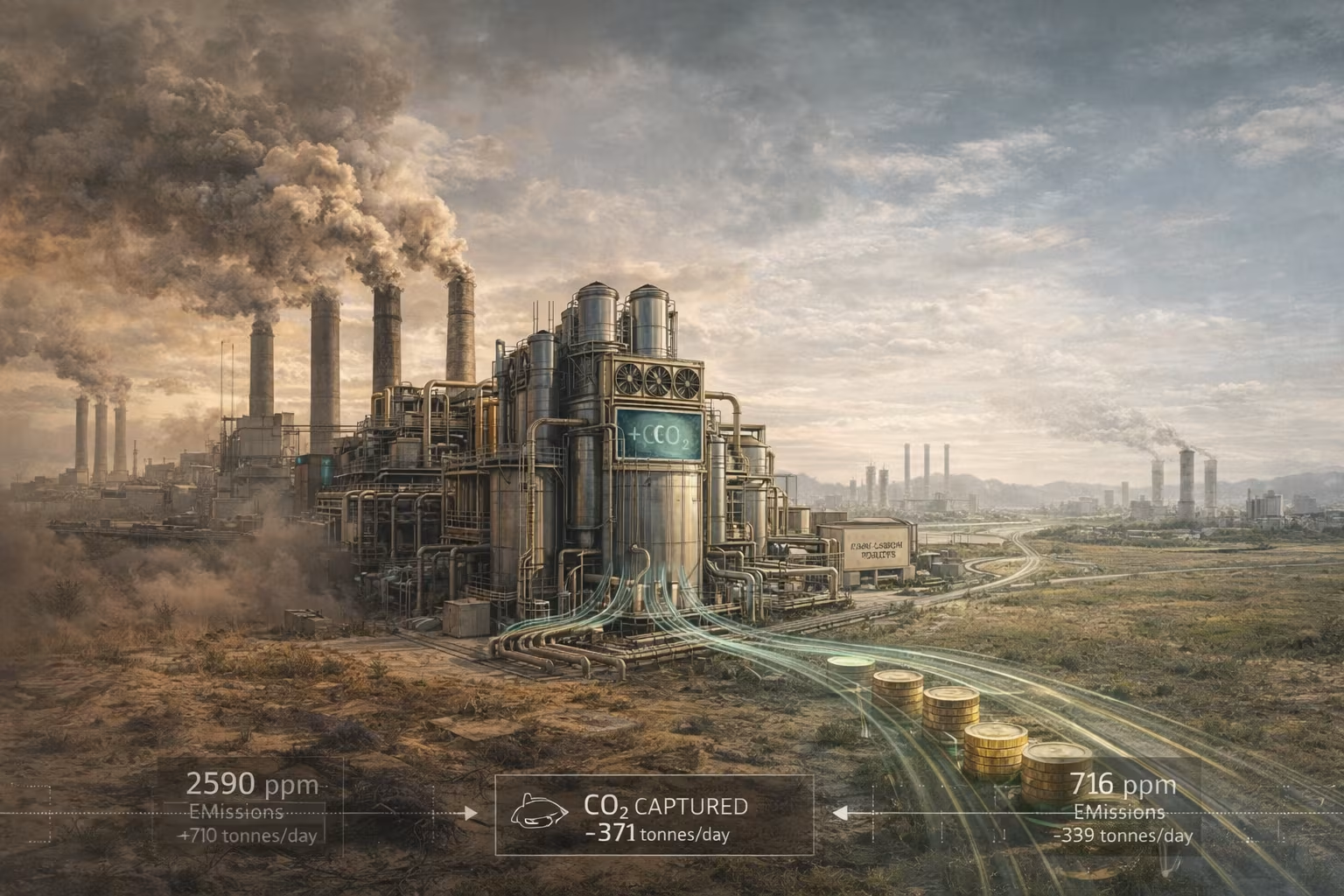
Industrial Environmental Impact: Managing and Monetising Your Facility's Full Footprint
Industrial operations generate environmental impacts that extend well beyond carbon - air quality, water, land use, community health, and ecosystem effects all fall within the scope of modern environmental compliance and ESG evaluation. Understanding the full environmental footprint is the starting point for managing it effectively and monetising the reductions.
For the comprehensive strategic context, refer to our Carbon Capture Technology Guide.
Air Quality: The Most Visible Impact
Industrial air pollution - particulate matter, SO2, NOx, heavy metals, and volatile organic compounds - has direct, measurable impacts on human health, agricultural productivity, and ecosystem function.
- PM2.5 from industrial stacks contributes significantly to ambient concentrations in manufacturing corridors
- SO2 and NOx contribute to acid deposition affecting soil chemistry and water quality
- Ground-level ozone from NOx damages crops and ecosystems in affected areas
- Heavy metals in fly ash accumulate in soil - creating long-term legacy liabilities
Water: Acid Deposition and Runoff
SO2 and NOx emissions from industrial facilities contribute to acid deposition - both dry deposition on surfaces and wet deposition through acidified precipitation. This affects:
- Water quality in local catchments - reducing pH in rivers and lakes
- Freshwater ecosystem health and biodiversity
- Agricultural soil quality in affected areas
- Regulatory risk in water-stressed regions under increasing scrutiny
Land and Ecosystem Impacts
Particulate deposition from industrial stacks affects vegetation cover, soil chemistry, and biodiversity in areas surrounding facilities:
- Heavy metal accumulation in soil and vegetation from fly ash and stack emissions
- Long-term environmental liability accumulation that appears in acquisition and lending due diligence
- Habitat degradation from sustained acid deposition and particulate loading
Community Health and Social Licence
Industrial facilities located near residential areas carry community health impact obligations that are increasingly scrutinised by regulators, NGOs, and investors. Verified emission reduction infrastructure:
- Provides credible evidence of environmental performance improvement
- Reduces community complaints that can trigger regulatory attention
- Supports ongoing social licence to operate in proximity to residential areas
- Strengthens stakeholder relations with local government and community organisations
Quantifying and Reporting Environmental Impact
The commercial value of environmental impact management - in regulatory terms, ESG reporting terms, and capital market terms - depends on the ability to quantify and credibly report performance improvements. Verified data is the foundation of credible sustainability communication.
Facilities with CEMS infrastructure can quantify SO2, NOx, particulate, and CO2 emission reductions with precision, generating the verified data that ESG reports, sustainability-linked loan covenants, and international buyer requirements need.
For environmental benefits of carbon capture specifically, see carbon capture environmental benefits. Sustainability benefits are in industrial sustainability benefits. For the ESG reporting framework, see our guide on ESG for Industrial Companies.
Conclusion
Managing industrial environmental impact comprehensively - across air, water, land, and climate dimensions - is the foundation of credible sustainability positioning. The carbon capture dimension is covered in full in our Carbon Capture Technology Guide. Environmental benefits are quantified in carbon capture environmental benefits. Sustainability benefit analysis is in industrial sustainability benefits. For the ESG reporting and investor communication context, see our guide on ESG for Industrial Companies.
Carbon.ind.in provides comprehensive environmental impact assessment and reduction planning for Indian industrial facilities. Book a site survey to understand your full environmental footprint.