
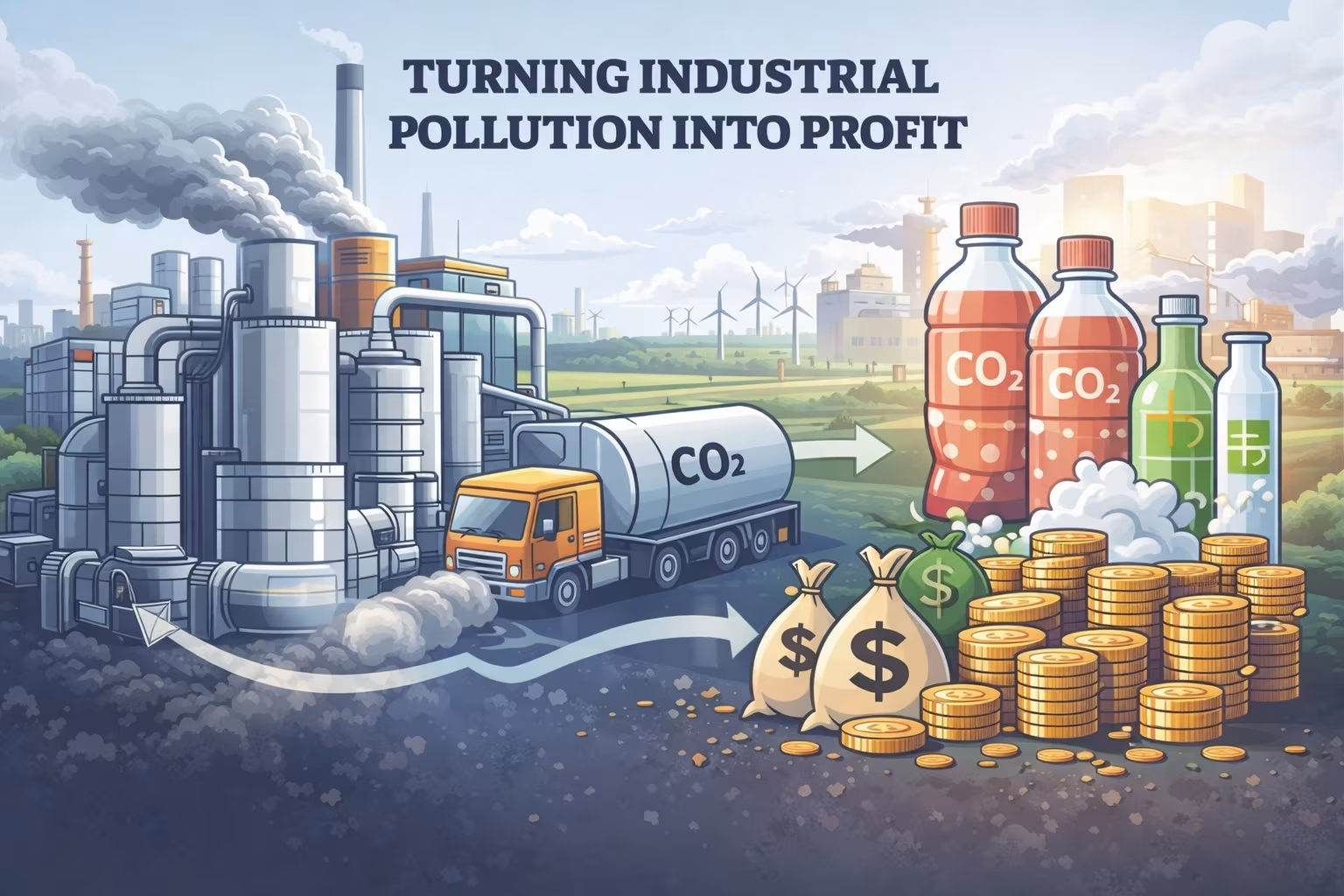
Industrial pollution has long been treated as an unavoidable cost of doing business. Scrubbers, filters, compliance audits, and ESG documentation — all necessary, yet rarely profitable.
But what if emissions could generate revenue instead of penalties?
Forward-thinking industries are now transforming CO₂, SOx, NOx, VOCs, and particulate matter into sellable assets. Pollution control is no longer just about compliance — it’s about creating recurring income streams.
The Hidden Industrial Pain Points
Across industries such as textiles, ceramics, chemicals, boilers, waste-to-energy plants, and foundries, manufacturers face growing environmental and financial pressure.
- Pollution control systems add cost without visible returns
- Rising ESG and BRSR reporting requirements
- Price pressure squeezing already thin margins
- Compliance risks slowing expansion and approvals
Traditional environmental systems are defensive investments. Modern industry demands strategic ones.
From Emissions to Revenue Streams
Advanced modular scrubber technologies now capture industrial pollutants and convert them into commercially viable products.
1. CO₂ Resale
- Food and beverage applications
- Industrial processing
- Specialized chemical use
2. High-Value Chemical By-Products
- Sodium Carbonate (Na₂CO₃)
- Sodium Hydroxide (NaOH)
- Chlorine (Cl₂)
- Hydrogen (H₂)
Instead of treating captured emissions as waste, industries can generate recurring chemical revenue.
3. AI-IoT-ERP Integration
- Audit-ready ESG dashboards
- Real-time carbon tracking
- Predictive maintenance alerts
- Performance analytics
This transforms pollution control into a hybrid revenue model: Hardware + Chemicals + Data + ESG Compliance.
Zero-CAPEX Adoption: Lower Risk, Faster Deployment
One of the most attractive aspects of modern pollution-to-profit platforms is flexible adoption models.
- Zero upfront investment through revenue sharing
- CSR or green finance-backed funding routes
- Retrofit-ready integration with existing systems
- New modular installations for greenfield projects
No heavy capital burden. Faster ROI. Immediate environmental impact.
Impact at Scale
For a 1 TPH reference system, measurable annual impact can include:
- 2,600 tons of CO₂ captured per year
- Equivalent of 117,500 trees annually
- Payback period of less than 2 years
This is sustainability with financial logic — not just environmental responsibility.
Industries That Benefit First
- Textile processing units
- Ceramic manufacturers
- Chemical plants
- Boilers (1–15 TPH)
- Waste-to-energy facilities
- Foundries
- Agro and pesticide industries
These sectors face intense compliance scrutiny and fuel-related emissions — making monetized pollution control highly attractive.
Near-Zero OPEX & ZLD Advantage
Near-Zero OPEX
On-site raw material regeneration significantly reduces ongoing operational costs.
Zero Liquid Discharge (ZLD)
Scrubber water is recycled, and fertilizer liquor output creates additional value.
Operational efficiency and environmental compliance move together.
The Strategic Advantage
- Improved ESG scorecards
- Faster regulatory approvals
- Additional revenue channels
- Reduced environmental liability
- Stronger competitive positioning
The future of manufacturing is not just cleaner. It’s smarter. Profitable. Sustainable.
Conclusion: The Industrial Reset
The next phase of industrial growth will not be driven by automation alone. It will be powered by intelligent environmental infrastructure.
When emissions create income,
When compliance funds expansion,
When sustainability strengthens margins —
That is when industrial pollution turns into profit.