
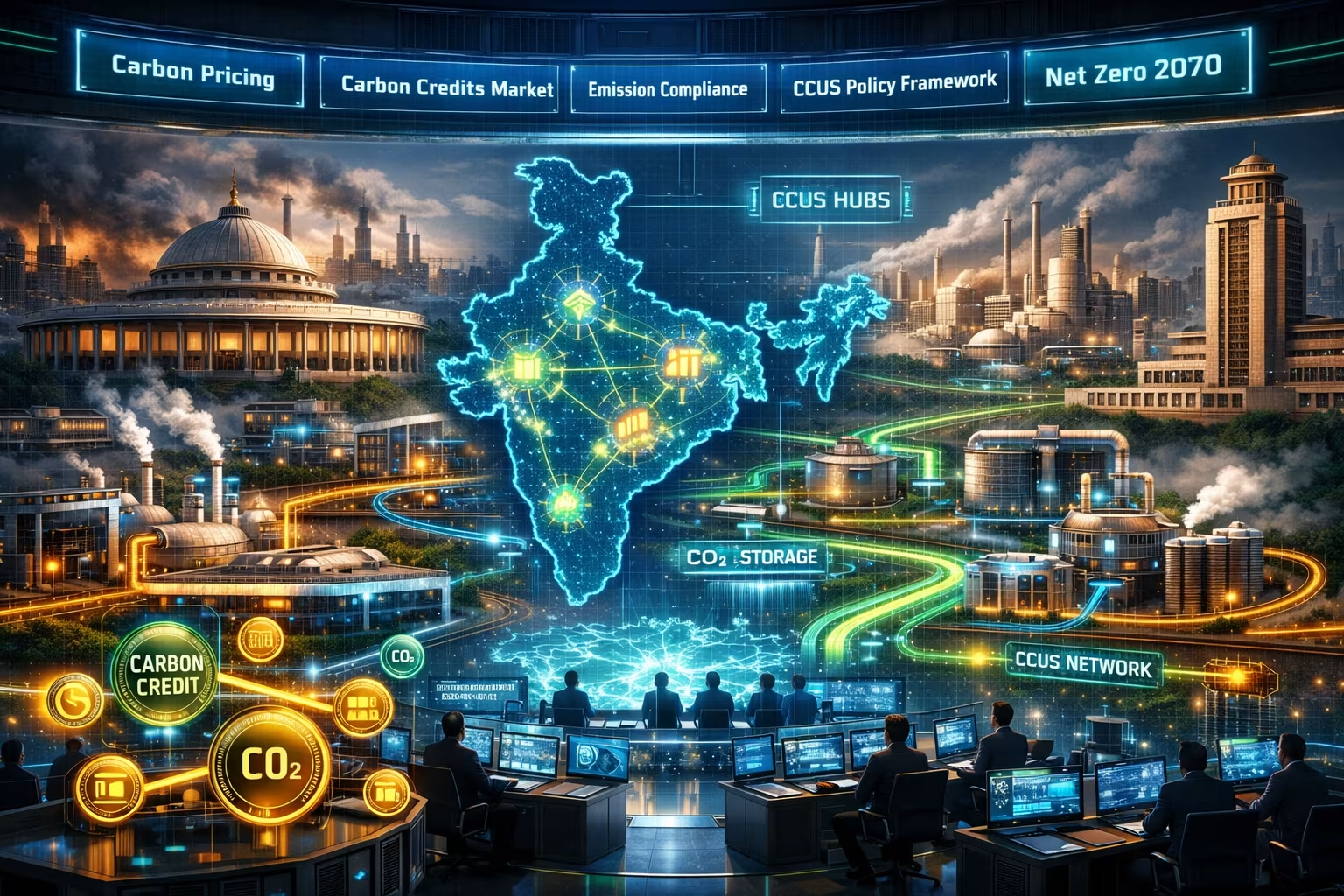
Carbon Capture Policy and Regulations: What Indian Industry Needs to Know
India's regulatory environment for carbon capture and industrial emission reduction is one of the most rapidly evolving in Asia. Facilities that understand the policy landscape can position compliance investments to generate both regulatory protection and market returns.
For the comprehensive strategic context, refer to our Carbon Capture Technology Guide.
The Energy Conservation (Amendment) Act 2022 and CCTS
The Carbon Credit Trading Scheme established under the 2022 amendments to the Energy Conservation Act is India's primary compliance carbon market framework. It:
- Designates obligated entities in high-emission sectors
- Establishes the process for carbon credit issuance and trading
- Creates a domestic regulatory floor for carbon pricing
Facilities covered by CCTS will be required to either reduce emissions to mandated levels or purchase carbon credits to cover the shortfall - making carbon capture investment a direct compliance tool rather than an optional enhancement.
CPCB Emission Standards and Enforcement Trends
The Central Pollution Control Board has progressively tightened emission standards across all major industrial sectors. Current standards for cement, steel, and power facilities set concentration limits for PM, SO2, NO2, and mercury that require modern emission control infrastructure to achieve.
Enforcement Is Intensifying
- Increased frequency of stack testing and surprise inspections
- Real-time monitoring requirements for major emission sources
- Willingness to issue shutdown notices for persistent non-compliance
- Heightened scrutiny of facilities in non-attainment zones
PAT Scheme: Penalties and Opportunities
The Perform, Achieve and Trade scheme creates both obligations and opportunities for covered facilities. Facilities that exceed their Specific Energy Consumption targets earn Energy Saving Certificates (ESCerts) that can be sold to underperforming facilities. Carbon capture investments that reduce energy intensity alongside emission reduction can improve PAT performance, creating dual value - avoided penalties and tradeable ESCerts.
EU CBAM and Export Markets
The EU Carbon Border Adjustment Mechanism, phased in from 2023 and fully operative from 2026, applies carbon costs to imports of cement, steel, aluminium, fertiliser, and electricity to the EU market. Indian exporters in these sectors will face CBAM charges unless they can demonstrate verified low-carbon production processes under protocols recognised by the EU.
What CBAM Means Practically
- EU importers of affected products must surrender CBAM certificates equal to the carbon price gap
- Indian exporters without verified emission reduction records face a direct cost competitiveness disadvantage
- Facilities with credible, verified carbon capture infrastructure are best positioned to minimise CBAM exposure
India's NDCs and Sectoral Targets
India's Nationally Determined Contributions under the Paris Agreement commit to achieving 45% reduction in the emissions intensity of GDP by 2030 and net-zero by 2070. These national commitments will flow progressively into sector-specific targets and facility-level requirements. Industrial operators that develop verified emission reduction capability now are building compliance infrastructure that will be required in the future - at lower cost and with greater commercial return than later forced adoption.
For India-specific context, see carbon capture in India. Credit generation and registry requirements are in carbon credit generation. Investment mechanisms are covered in carbon capture investment opportunities. The broader compliance technology landscape is in our resource on Environmental Compliance Technologies.
Conclusion
Policy literacy is a competitive advantage for industrial operators navigating the carbon transition. The full strategic framework is in our Carbon Capture Technology Guide. For India-specific regulatory context, see carbon capture in India. Carbon credit generation and registry requirements are covered in our carbon credit generation guide. The broader compliance technology landscape is in our resource on Environmental Compliance Technologies.
Carbon.ind.in provides regulatory compliance guidance as part of every project engagement. Book a site survey today.