
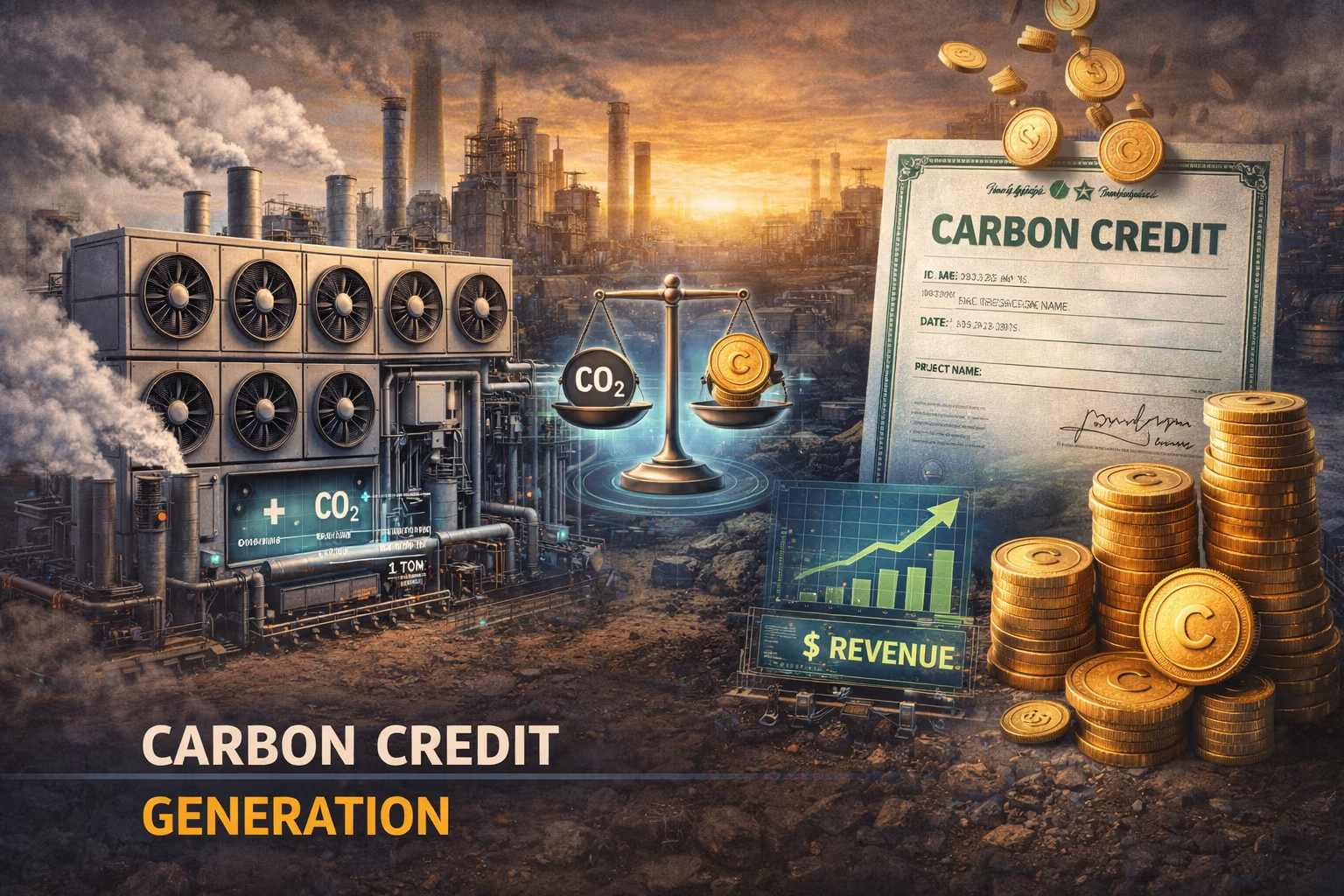
Carbon Credit Generation: How Indian Industries Convert Verified Reductions Into Revenue
Carbon credits are the financial instrument that converts verified industrial emission reductions into tradeable market value. Understanding how to generate, verify, and sell high-quality carbon credits is essential before making a carbon capture investment - because the commercial value of your system depends directly on your verification pathway.
For the comprehensive strategic context, refer to our Carbon Capture Technology Guide.
What Is a Carbon Credit?
A carbon credit is a tradeable financial instrument representing one tonne of CO2 equivalent that has been verified as reduced, avoided, or removed from the atmosphere through a specific project activity.
- Each verified tonne of CO2 captured and permanently stored or utilised generates one carbon credit
- Credits are registered on recognised registries - Verra VCS, Gold Standard, India's domestic CCTS registry
- Credits can be traded to buyers who use them to offset their own emissions or meet regulatory obligations
The MRV Foundation: Measure, Report, Verify
Monitoring, Reporting, and Verification (MRV) is the process that converts a physical emission reduction into a recognised carbon credit. It has three distinct stages:
Monitoring
Continuous measurement of actual emission reductions using CEMS and supporting measurement equipment, following the specific protocol requirements of your chosen verification standard.
Reporting
Compiling monitoring data into the standardised format required by your chosen verification protocol. This covers data completeness, quality assurance procedures, and any calculation methodologies required by the protocol.
Verification
An accredited third-party audit of your monitoring data and project documentation to confirm that reductions occurred as claimed and that all protocol requirements were met.
Facilities that invest in robust CEMS from day one generate clean, auditable reduction records that command full market value. Facilities with poor measurement infrastructure often find their credits discounted or rejected during verification - undermining the entire commercial case for the investment.
Choosing the Right Verification Protocol
India's carbon credit landscape encompasses multiple verification frameworks:
- Domestic CCTS compliance framework - for covered sectors under India's national compliance market
- Verra Verified Carbon Standard (VCS) - largest voluntary carbon standard globally, widely recognised by international buyers
- Gold Standard - voluntary standard with emphasis on co-benefits beyond carbon reduction
- Sector-specific methodologies - developed specifically for cement, steel, and power sector applications
Voluntary international standard credits typically command higher market prices than domestic-only credits, but require more detailed monitoring infrastructure and more rigorous verification processes.
The Registry and Issuance Process
Once verified reductions are documented and audited, the project developer submits the verification report to the chosen registry. The registry:
- Reviews the submission for completeness and protocol compliance
- Issues carbon credits to the project's account
- Maintains a public record preventing double-counting across buyers and sellers
The complete registry and issuance process typically takes 3-6 months from completed verification to credit issuance - a timeline that should be factored into project cash flow planning.
Selling Credits: Market Access Pathways
Carbon credits can be sold through multiple channels:
- Direct bilateral agreements with corporate buyers who have net-zero commitments
- Brokerage platforms and carbon exchanges
- Government compliance market mechanisms under India's CCTS
- International voluntary market platforms
For ROI context that models carbon credit revenue, see our carbon capture ROI guide. Policy and regulatory requirements for credit generation are in carbon capture policy and regulations. Market dynamics are covered in carbon capture market trends. The broader carbon credit investment context is in our guide on Carbon Credits for Industries.
Conclusion
Carbon credit generation is the commercial engine of a carbon capture investment. Getting the MRV infrastructure and verification pathway right from the start determines whether your system generates full-value credits or discounted ones. The full capture technology context is in our Carbon Capture Technology Guide. For financial return modelling, see our carbon capture ROI guide. For the broader carbon credit context, see our guide on Carbon Credits for Industries.
Carbon.ind.in manages the complete carbon credit generation pathway from CEMS installation through registry issuance. Book a site survey to understand your credit generation potential.