
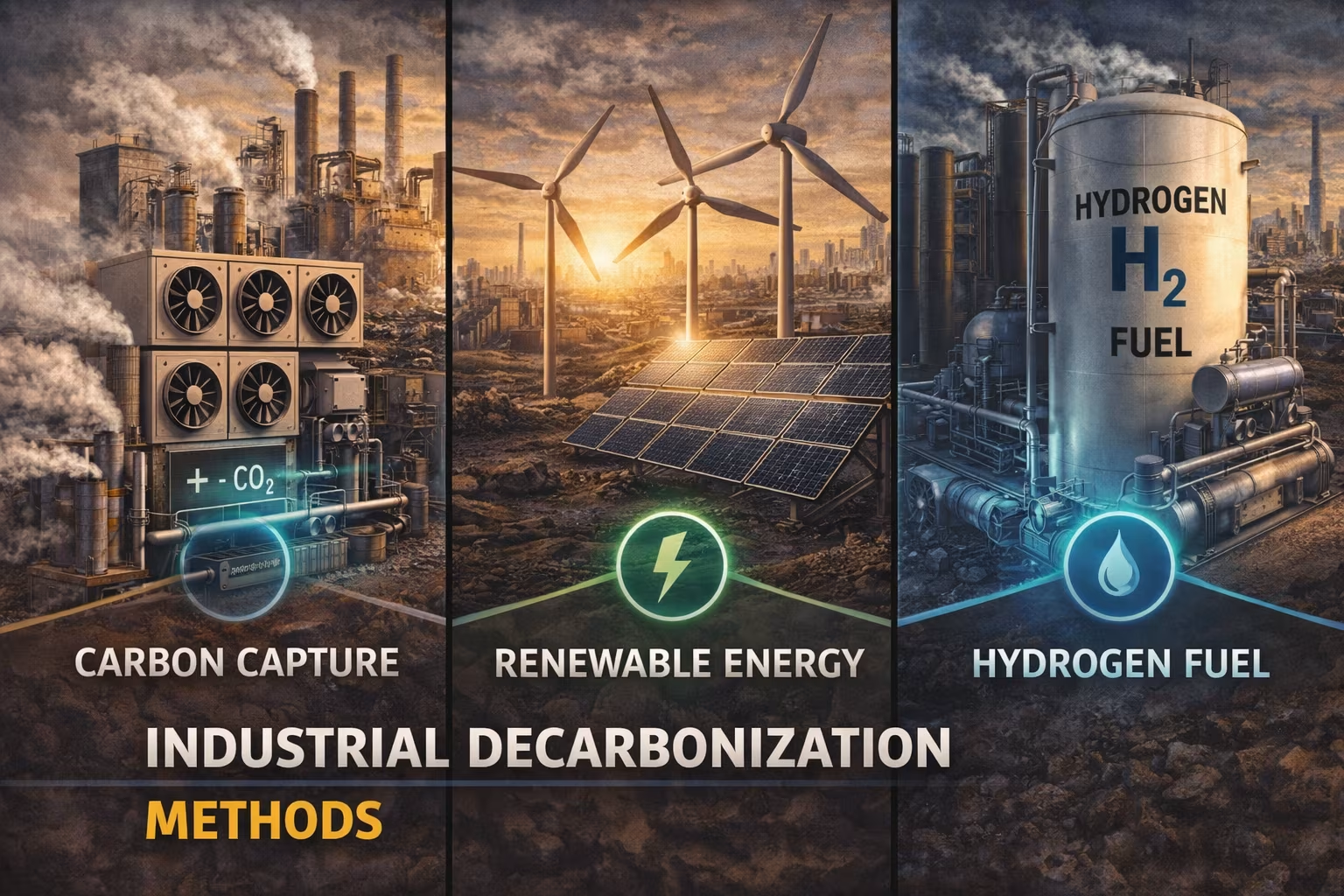
Industrial Decarbonization Methods: A Phased Roadmap for Indian Manufacturers
Industrial decarbonisation is not a single technology decision - it is a structured programme of investment across multiple time horizons, combining energy efficiency, fuel switching, process optimisation, and carbon capture to achieve verified, measurable emission reductions.
For the comprehensive strategic context, refer to our Carbon Capture Technology Guide.
Phase 1: Baseline Assessment and Efficiency Measures
The first phase of any industrial decarbonisation programme establishes the emission baseline - the measured, documented starting point against which all future reductions are calculated and verified.
Without a rigorous baseline, no carbon credits can be generated. The baseline is the commercial foundation of the entire investment programme.
Phase 1 Deliverables
- Comprehensive emission source mapping across all stacks and vents
- Verified baseline emission measurements per source
- Energy efficiency programme implementation - heat recovery, combustion optimisation, motor upgrades
- Process optimisation measures that are commercially self-justifying
Phase 2: Fuel Transition and Process Redesign
Phase 2 implements fuel switching and process redesign measures where economically viable - reducing carbon intensity at source before capture systems are installed.
Phase 2 Priorities
- Fuel switching from coal to lower-carbon alternatives where competitively priced
- Process chemistry optimisation to reduce inherent emission generation
- Waste heat utilisation to reduce total thermal input per unit of output
- Early carbon credit registration from efficiency and fuel measures where applicable
Phase 3: Carbon Capture Deployment
Phase 3 deploys carbon capture infrastructure - typically starting with the highest-return emission source identified in the baseline assessment, then expanding systematically across additional sources.
Phase 3 Approach
- Deploy modular capture unit on the highest-concentration, most accessible emission source
- Generate carbon credit revenue from Phase 3A that contributes to Phase 3B financing
- Build operational expertise and verified reduction history before scaling
- Expand to additional emission sources as commercial returns validate the approach
Phase 4: Verification, Registration, and Market Access
Phase 4 establishes the full commercial infrastructure of the emission reduction programme:
- Third-party verification of accumulated reduction records
- Carbon registry registration and credit issuance
- Market access pathways for credit sale - domestic compliance, voluntary international, pre-purchase agreements
- ESG reporting integration using verified reduction data
Building a Durable Competitive Position
Facilities that execute a complete industrial decarbonisation programme across all four phases build a durable competitive position that compounds over time:
- Verified reduction history improves access to sustainability-linked capital
- Growing carbon credit revenue funds ongoing programme expansion
- ESG performance data supports export market access and investor relations
- Regulatory compliance infrastructure reduces enforcement risk as standards tighten
For integrated strategy context, see emission reduction strategies. Sustainability benefit quantification is in industrial sustainability benefits. The broader decarbonisation guide is our Industrial Decarbonization Guide.
Conclusion
Industrial decarbonisation is a programme, not a project. The facilities that build systematic, phased capability across multiple reduction technologies will generate the most durable competitive advantage from the carbon transition. The full capture technology context is in our Carbon Capture Technology Guide. For integrated strategy, see emission reduction strategies. Sustainability benefit quantification is in industrial sustainability benefits. The broader decarbonisation roadmap is in our Industrial Decarbonization Guide.
Carbon.ind.in designs and implements complete industrial decarbonisation programmes for Indian manufacturing facilities. Book a site survey to start your roadmap.