
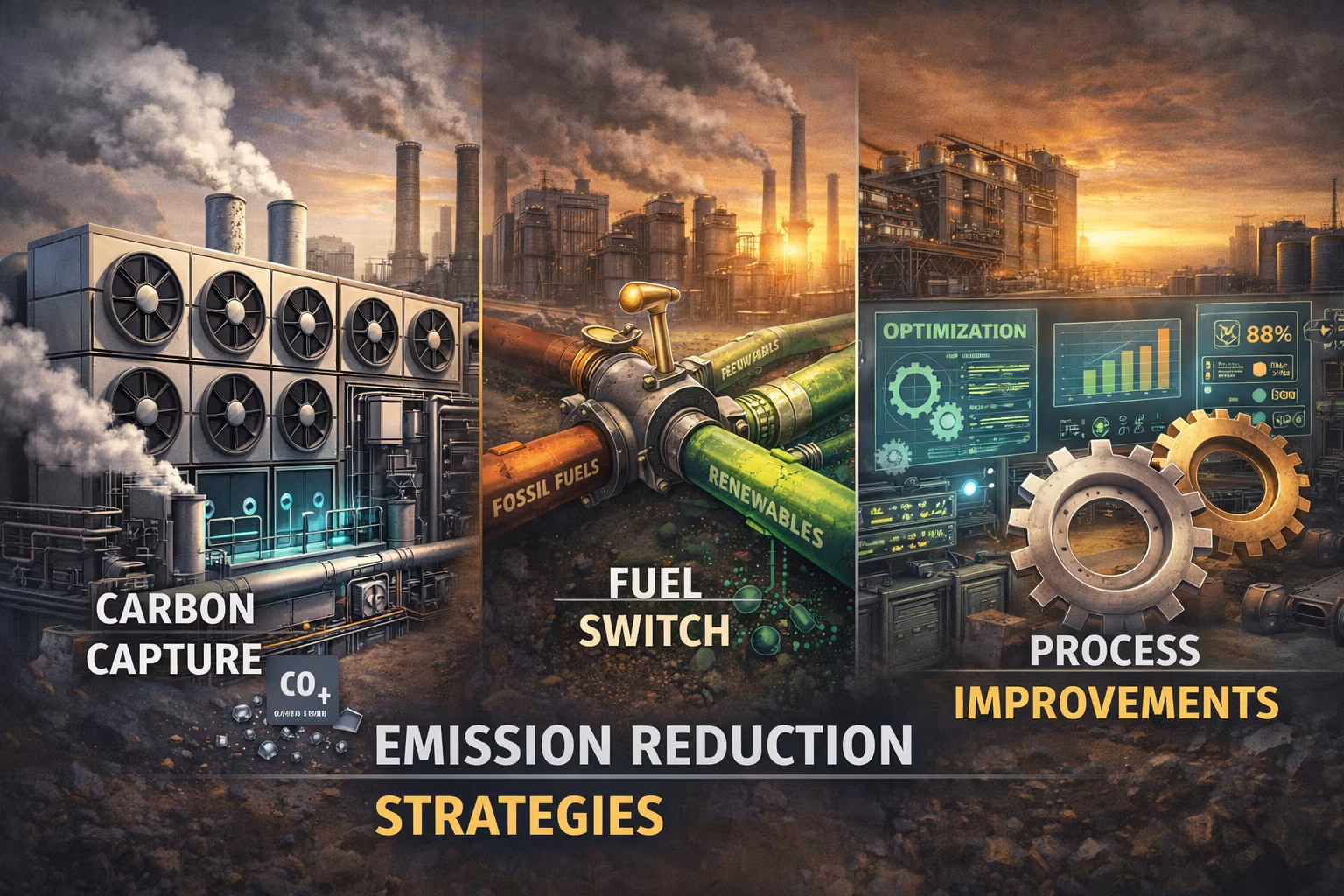
Emission Reduction Strategies: Integrating Carbon Capture Into a Complete Industrial Framework
Carbon capture technology is one element of a complete emission reduction strategy. The most financially effective approach integrates capture with complementary measures that reduce the total emission burden while maximising verifiable reduction volume and carbon credit generation potential.
For the comprehensive strategic context, refer to our Carbon Capture Technology Guide.
Energy Efficiency: The First Step in Every Strategy
Energy efficiency improvement reduces absolute emission volumes before any capture infrastructure is installed, improving the economics of downstream capture by reducing the total emission burden the system must handle.
Priority Measures
- Heat recovery from exhaust streams and cooling systems
- Combustion optimisation - fuel-air ratio management, burner upgrades
- Motor efficiency upgrades and variable speed drives
- Insulation improvements to reduce thermal losses
For most Indian industrial facilities, a structured energy efficiency programme can reduce total emissions by 10-20% at operating cost savings - making it both commercially self-justifying and a carbon capture enabler.
Fuel Switching: Reducing Carbon Intensity at Source
Fuel switching from coal to lower-carbon fuels - natural gas, bioenergy, waste-derived fuels - reduces the carbon intensity of combustion upstream of the capture system. This improves capture efficiency per tonne of fuel consumed and reduces the total volume of CO2 that must be handled downstream.
For facilities with access to competitively priced alternative fuels, fuel switching and carbon capture are complementary strategies that together deliver deeper emission reductions than either alone.
Process Optimisation: Reducing Waste Emissions
Many industrial processes generate emissions from inefficiencies rather than from inherent chemistry - excess combustion air, heat loss through uninsulated surfaces, fugitive emissions from equipment leaks. Process optimisation reduces these waste emissions, improving:
- Carbon intensity of production
- Concentration profile of flue gas streams entering capture systems
- Overall capture system efficiency as a secondary benefit
Carbon Capture: Addressing Residual Emissions
After energy efficiency, fuel switching, and process optimisation have reduced total emission volumes, carbon capture addresses the residual emissions that cannot be eliminated through upstream measures. This sequenced approach maximises the financial efficiency of capture investment - the system handles a reduced, optimised emission stream rather than the full unmanaged output of an inefficient process.
Integrated Strategy: Building the Full Value Chain
The highest-value emission reduction strategies integrate all four elements into a coherent programme:
- Clear sequencing - efficiency first, then fuel, then process, then capture
- Defined investment horizons with commercial milestones at each phase
- Connected commercial outcomes - credits generated from each stage fund the next
- Aggregate verified reduction that exceeds the sum of individual measures
For decarbonisation methodology, see industrial decarbonization methods. System options for different strategy configurations are in types of carbon capture systems. Credit generation from integrated strategies is covered in carbon credit generation. The complete industrial emission control framework is in our guide on Industrial Emission Control Systems.
Conclusion
The most effective emission reduction strategy integrates carbon capture with complementary measures - energy efficiency, fuel switching, process optimisation - to maximise both total reduction volume and carbon credit generation potential. The full technology context is in our Carbon Capture Technology Guide. For decarbonisation methodology, see industrial decarbonization methods. For the complete industrial emission control framework, see Industrial Emission Control Systems.
Carbon.ind.in designs integrated emission reduction strategies for Indian industrial facilities. Book a site survey to begin your assessment.