
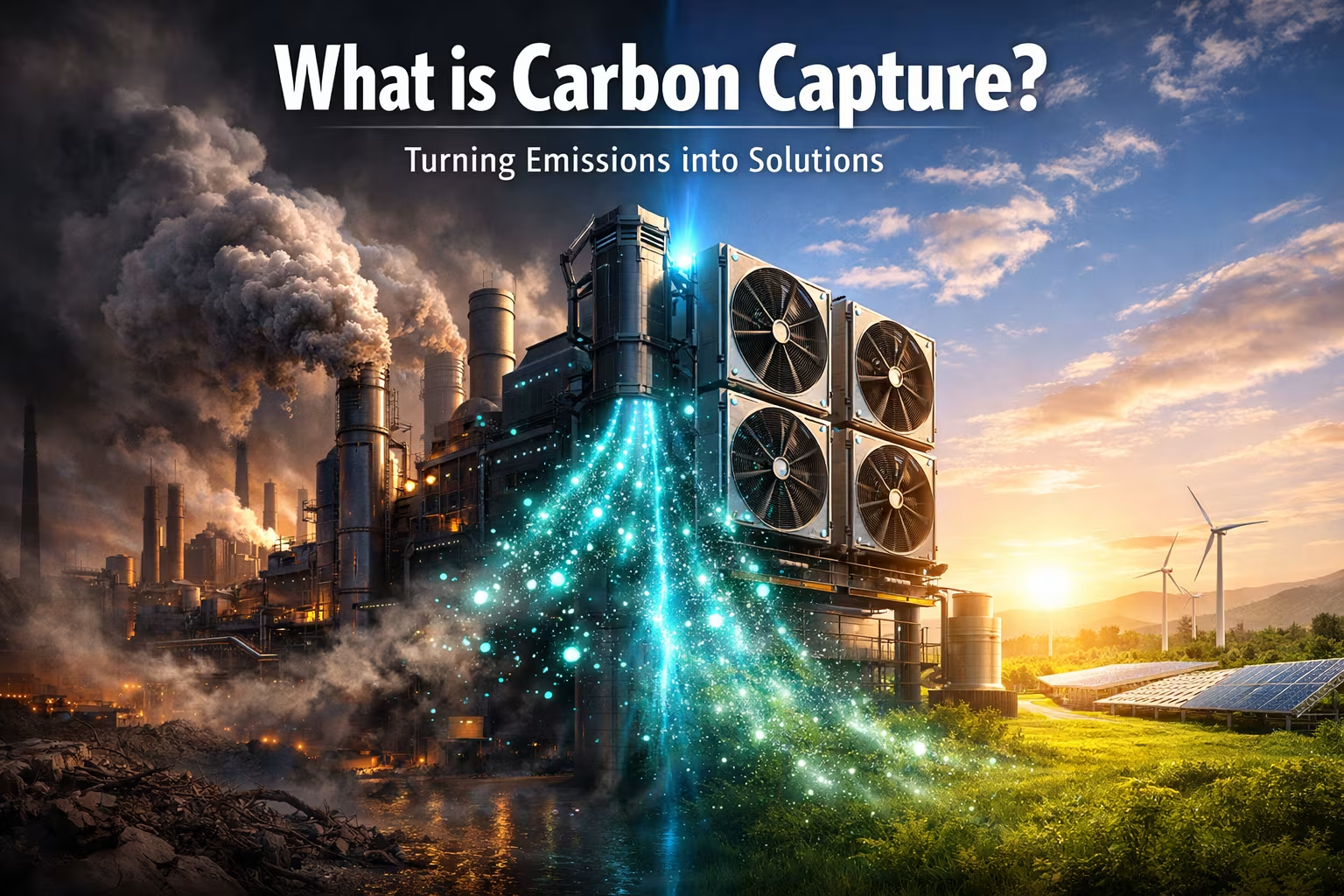
What is Carbon Capture: A Plain-Language Guide for Indian Industrial Decision-Makers
Carbon capture is one of the most discussed - and most misunderstood - technologies in industrial sustainability. Plant managers hear the term in regulatory briefings, ESG reports, and investor calls, yet many remain unclear on what it actually involves at the facility level.
For the comprehensive strategic context, refer to our Carbon Capture Technology Guide.
The Simple Definition
At its core, carbon capture is the process of intercepting carbon dioxide and other greenhouse gases at the point where they are produced - typically at an industrial stack or vent - and preventing them from entering the atmosphere.
The captured gas is then either:
- Stored permanently underground
- Utilised as an industrial feedstock
- Converted into a tradeable carbon credit through a verification and registration process
Carbon capture is not a single piece of equipment - it is a system of technologies and processes that transforms an emission liability into a measurable, verifiable, and monetisable asset.
Why Carbon Capture Is Not Just an Environmental Tool
Framing carbon capture as purely an environmental measure is commercially misleading. For Indian industrial facilities today, it is simultaneously:
- A compliance tool - verified capture infrastructure satisfies CPCB emission standards and PAT scheme obligations, reducing penalty exposure
- A revenue mechanism - verified emission reductions generate carbon credits tradeable in domestic and international markets
- A competitive asset - facilities with credible reduction records access sustainability-linked capital at preferential rates and satisfy ESG-mandating export buyer requirements
How Carbon Capture Works at the Facility Level
A carbon capture system intercepts flue gas from your facility's combustion or process equipment - kilns, boilers, furnaces, reactors - before it exits through the stack.
Step 1: Intercept
The gas stream passes through the capture unit, where CO2 and other target pollutants are absorbed or adsorbed and separated from the clean exhaust stream.
Step 2: Measure
The Continuous Emission Monitoring System (CEMS) installed alongside the capture unit measures in real time the volume and concentration of emissions captured. This data forms the evidence base for carbon credit verification.
Step 3: Verify and Register
An accredited third-party audit body reviews the monitoring data and confirms that reductions occurred. Verified reductions are registered on a carbon registry as tradeable credits.
Without reliable measurement, there are no verifiable credits. Without verifiable credits, there is no carbon revenue. The CEMS is therefore as commercially important as the capture equipment itself.
Carbon Capture vs Traditional Pollution Control
Many Indian facilities already operate conventional scrubbers, electrostatic precipitators, or bag filters. Here is how they compare:
Traditional Systems
- Remove particulate matter and certain gaseous pollutants
- Generate compliance records but no commercial return
- Cannot measure or monetise CO2 reductions
- Pure cost infrastructure
Modern Carbon Capture Systems
- Precise measurement of CO2 and greenhouse gas reductions
- Third-party verification of reductions
- Registration of verified reductions as tradeable carbon credits
- Cost and revenue infrastructure simultaneously
For a full comparison of system types and their commercial implications, refer to our guide on types of carbon capture systems applicable to Indian industry.
Which Facilities Benefit Most?
Any industrial facility with quantifiable, concentrated emission streams is a potential candidate. Priority sectors include:
- Cement and steel plants - a significant share of emissions arise from calcination, meaning fuel switching alone cannot achieve deep decarbonisation
- Thermal power plants - largest absolute emission volumes with technically mature capture options
- Chemical processors and refineries - high-concentration CO2 streams in multiple process steps
- Heavy fabricators - increasingly viable for modular deployment as system costs decline
The Carbon Credit: Where Technology Meets Commerce
The carbon credit is the instrument that converts a physical emission reduction into a tradeable financial asset. One credit equals one verified tonne of CO2 equivalent reduced or removed. Credits are registered on recognised platforms and sold to buyers who use them to offset their own emissions or meet compliance obligations.
For a step-by-step guide to credit generation, see our dedicated resource on carbon credit generation for industrial facilities. And for the full equipment breakdown that makes capture work, see the carbon capture equipment guide.
Conclusion
Carbon capture is the technology that transforms industrial emission control from a compliance obligation into a commercial opportunity. The full strategic and financial context is in our Carbon Capture Technology Guide. For system options, see types of carbon capture systems. For equipment specifications, see the carbon capture equipment guide. For the broader industrial control framework, refer to our guide on Industrial Emission Control Systems.
Carbon.ind.in works with industrial facilities across India to evaluate, design, and deploy capture infrastructure. Book a site survey to understand your facility's specific opportunity.